
Overview of Results & Framework
Overall Framework to improve the overall competitiveness of the railway sector
To jointly contribute to the improvement and enhancement of overall competitiveness of the railway sector, the Round Table Rolling Stock (RTR) Initiative has the target to improve the way of working between railway operators and rolling stock suppliers in the procurement of rolling stock and to significantly reduce development efforts.
The Initiative, being open to all interested stakeholders and consisting of representatives from both market sides (i.e., suppliers and operators), decided to work jointly on the development of six specific topics or respectively work packages:
- WP01 – Specification Catalogue
A common requirements structure and set of voluntary basic requirements, enabling the industry to move towards a “product-oriented” business approach. - WP02 – Total Cost of Ownership Structure
Conceptual framework for a shared structure of generic cost items that may drive total cost of ownership for a rolling stock fleet (without any quantification). - WP03 – Product Development & Procurement Process
Common understanding of the rolling stock product development and procurement process, with concepts for enhanced industrial cooperation between operators and suppliers. - WP04 – Maturity Model
Voluntary maturity model for technical (sub-)systems of vehicles, applicable to identify and communicate risks during the rolling stock procurement process. - WP05 – Sustainability
Generic CO₂ footprint framework and measurement tools for rolling stock, grounded in a review of existing norms and standards and assessments of legal and economic feasibility. - WP06 – Cyber Security & Data
Practical guidance on cybersecurity accountability and data definitions in rolling stock procurement, based on the European regulatory landscape and applicable across operators, manufacturers, and suppliers.
Overview of selected results
The Deliverable Overview Landscape plots the deliverables against the key phases of the procurement process (market observation, tender, project execution, operations). The deliverables are grouped along the six current work packages. Each bar indicates which phase of the procurement process a deliverable might be used for. This enables a clear deliverable usage across the procurement process. Click on the download button to get access to the deliverables (remark: downloads are free after registration).
Download deliverables- WP01
- Specification Catalogue
- WP02
- TCO Structure
- WP03
- Development & Procurement
- WP04
- Maturity Model
- WP05
- Sustainability
- WP06
- Cyber Security & Data
| Work package | Deliverable | Market Observation | Tender | Project Execution | Operations |
|---|---|---|---|---|---|
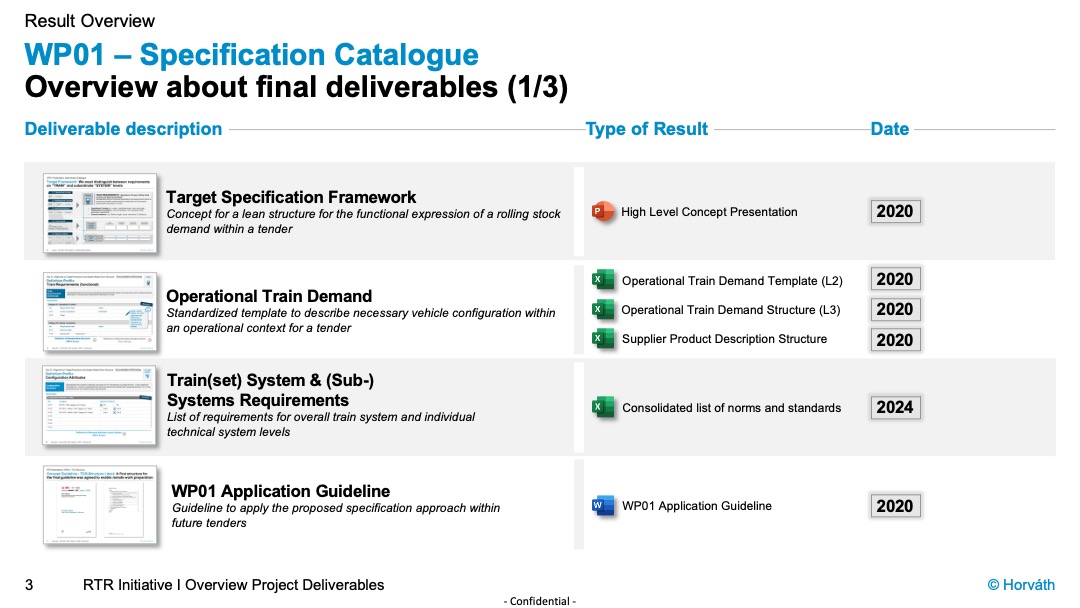
| WP01 — Specification Catalogue | RTR Target Specification Framework (Pyramid Structure) Common structure and viewpoint of how to organize, treat and categorize tender requirements for rolling stock across operators. | ||||
| Operation Train Demand Level 01-03 Description of requirements towards the train architecture and operational performance of the vehicles, as well as requested passenger features. | |||||
| Supplier Product Description Structure (SP05) Harmonized document structure and table of contents with description of specific topics that all product descriptions / technical parts of supplier offers could cover regarding train(set) system level and different (sub-)systems within a market observation interaction or tender offer. | |||||
| Basic Requirement Train (Set) System (L4) Lists of basic requirements based on existing norms and standards, in combination with necessary attributes for configuration that are considered as the minimum requirements to achieve a certified and authorized vehicle suitable for the intended specific operational context. The basic requirements could be applied for every tender without adaption and may be revised periodically independent from an individual project/tender. | |||||
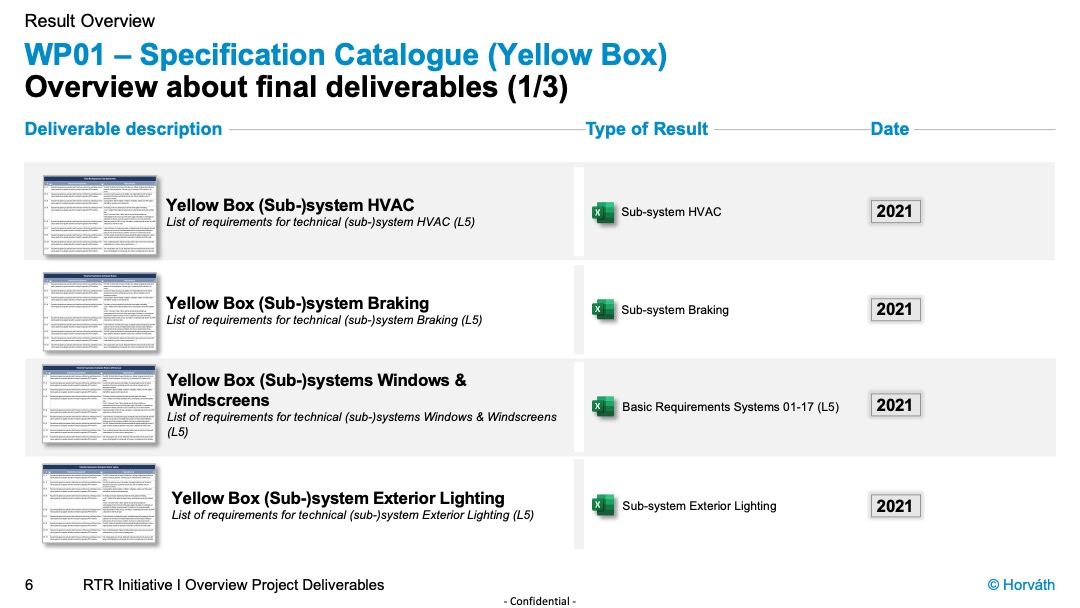
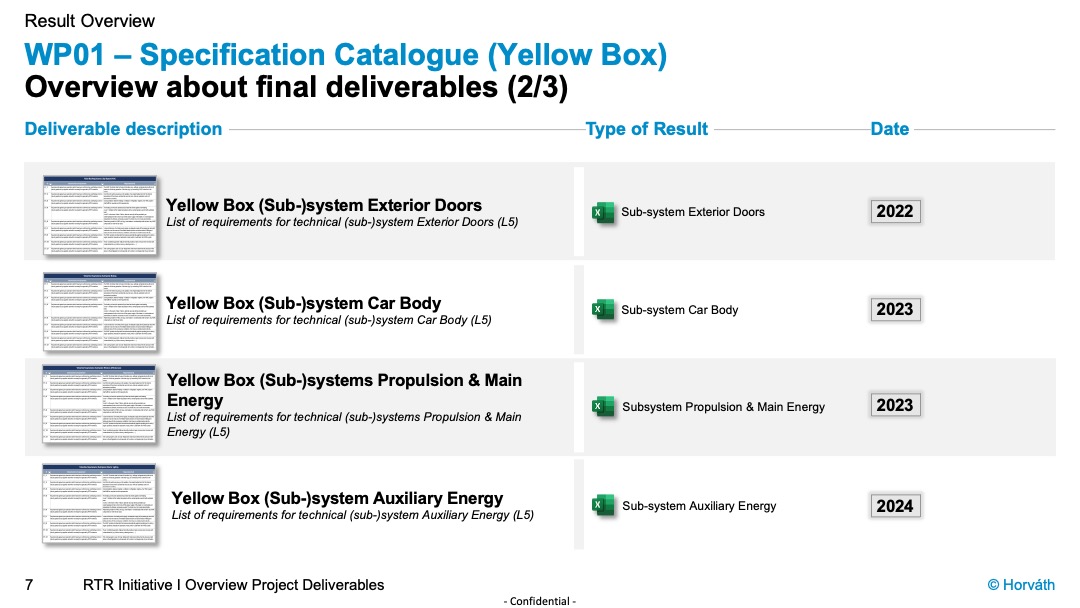
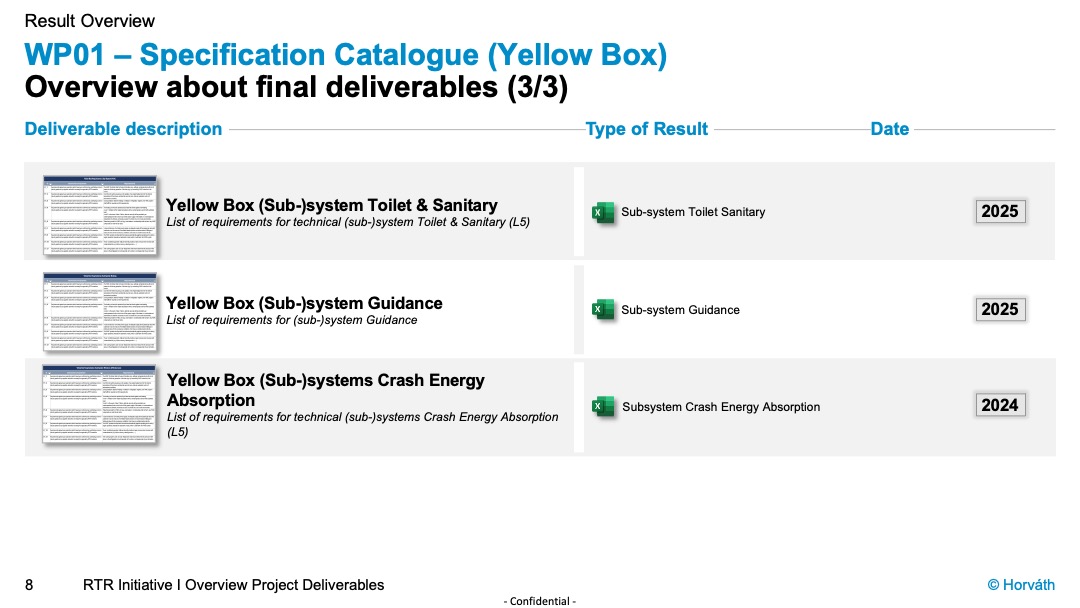
| Basics Requirements Systems 01-07 (15) – (Yellow Boxes) he detailed basic system requirements across levels 01–07 (the 15 yellow-box items). | |||||
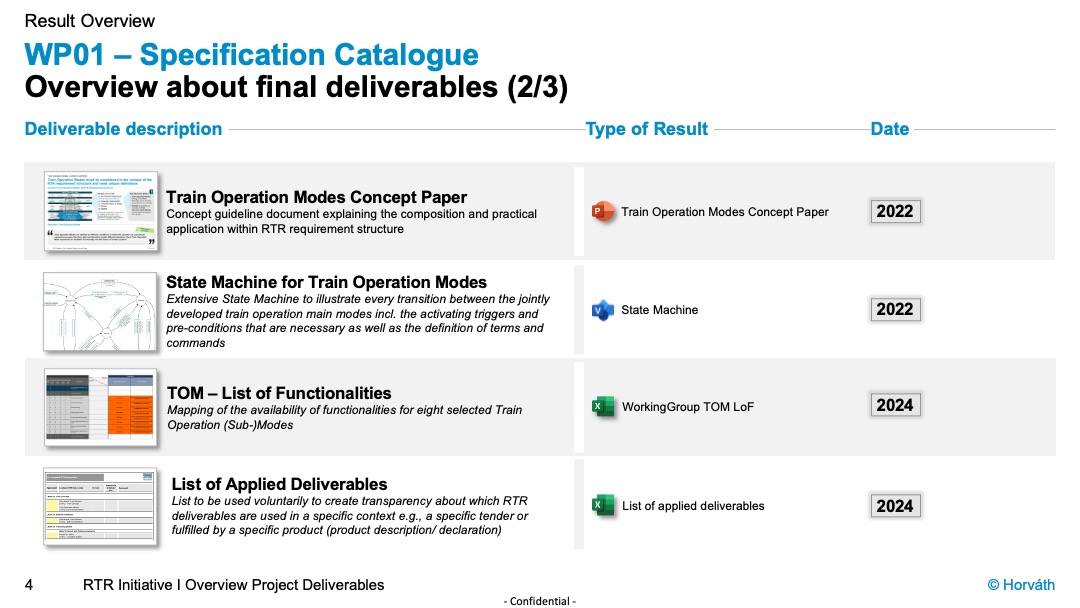
| TOM-Concept Paper WP01 Concept paper for the Train Operation Modes (TOM). | |||||
| State Machine for Train Operation Modes WP01 A state-machine model describing the train operation modes. | |||||
| TOM – List of Functionalities WP01 Catalogue of functionalities derived from the train operation modes. | |||||
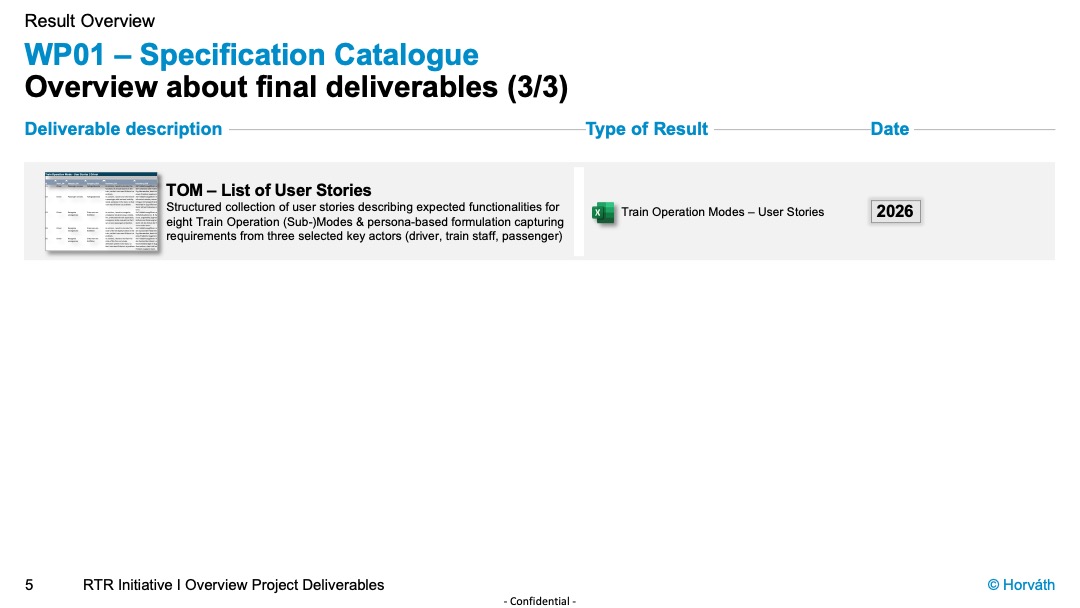
| TOM – List of User Stories WP01 User stories derived from the train operation modes. | |||||
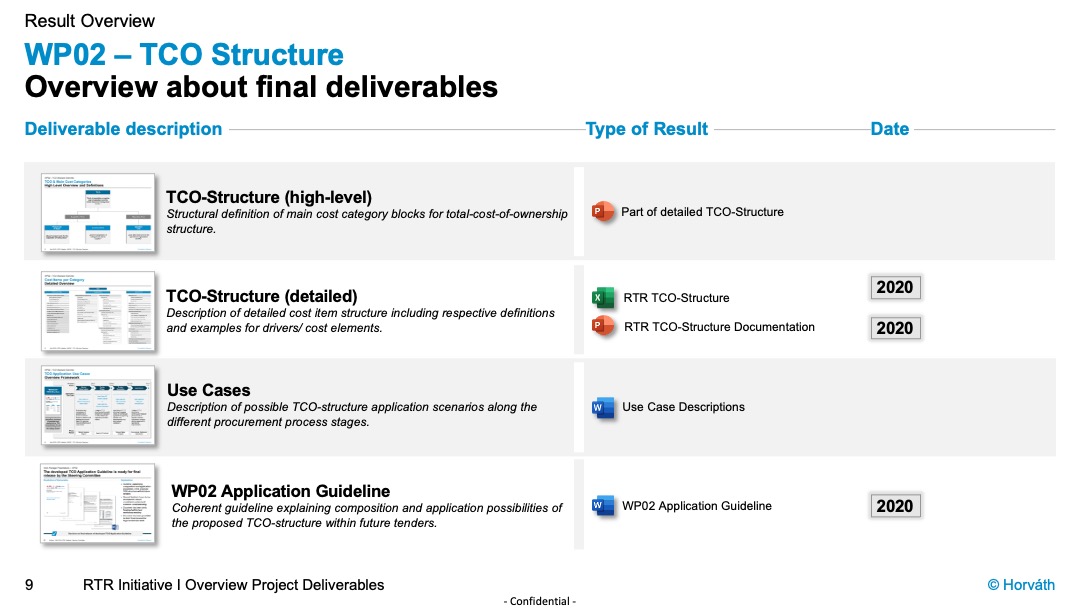
| WP02 — TCO Structure | TCO Structure TCO-Structure depicts an overarching list of items that may be used voluntarily and individually by any interested undertaking. The structure creates common understanding and coherent language what is meant by each item. | ||||
| TCO Structure (Use Cases) High-level overview of TCO-Structure & main cost categories, incl. overview on explanatory use cases. | |||||
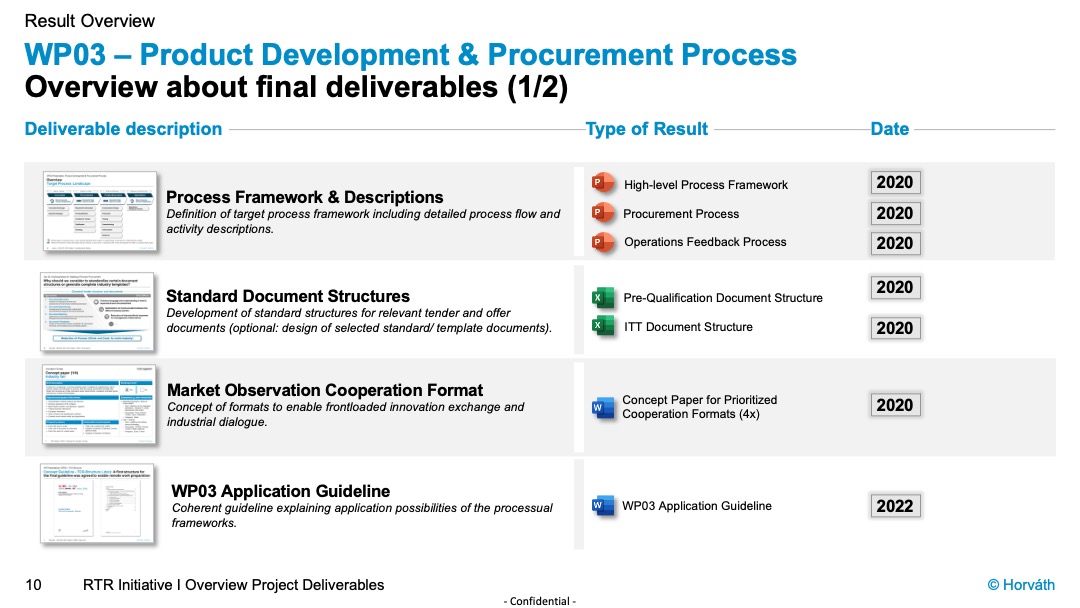
| WP03 — Development & Procurement | Process Framework & Description Definition of target process framework including detailed process flow and activity descriptions. | ||||
| Standard Document Structure Development of standard structures for relevant tender and offer documents (optional: design of selected standard/template documents). | |||||
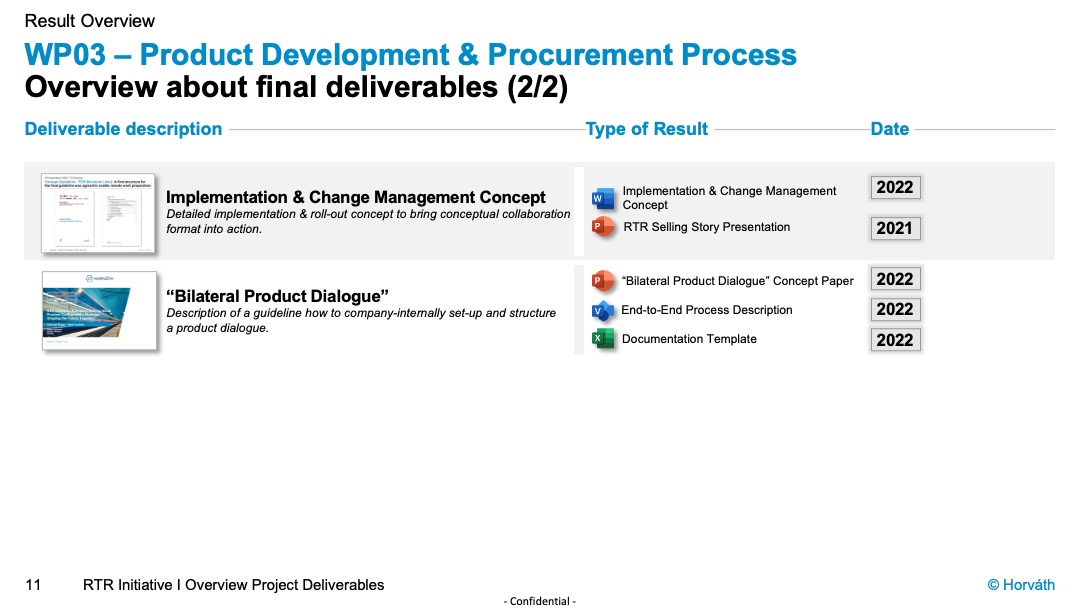
| Bilateral Product Dialogue Concepts to enable bilateral exchange between buyer and supplier and (bilateral) industrial dialogue within an early stage of the product development and procurement process. | |||||
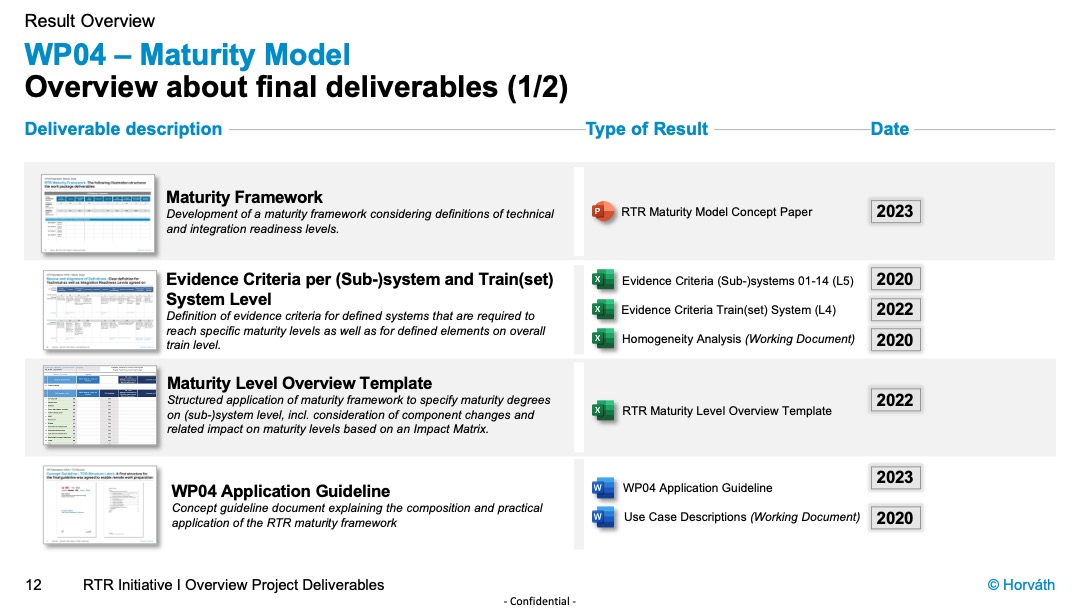
| WP04 — Maturity Model | Maturity Framework Development of a maturity framework considering definitions of technical and integration readiness levels. | ||||
| Maturity Level Overview Template Structured application of maturity framework to specify maturity degrees on (sub-)system level, incl. consideration of component changes and related impact on maturity levels based on an impact matrix. | |||||
| Evidence Criteria per (Sub-) & Train(Set) System Level Definition of evidence criteria for train elements on train(set) system level that cannot be allocated to single (sub-)systems (e.g., transverse elements), as well as for all defined sub-systems, that are required to reach specific maturity levels. | |||||
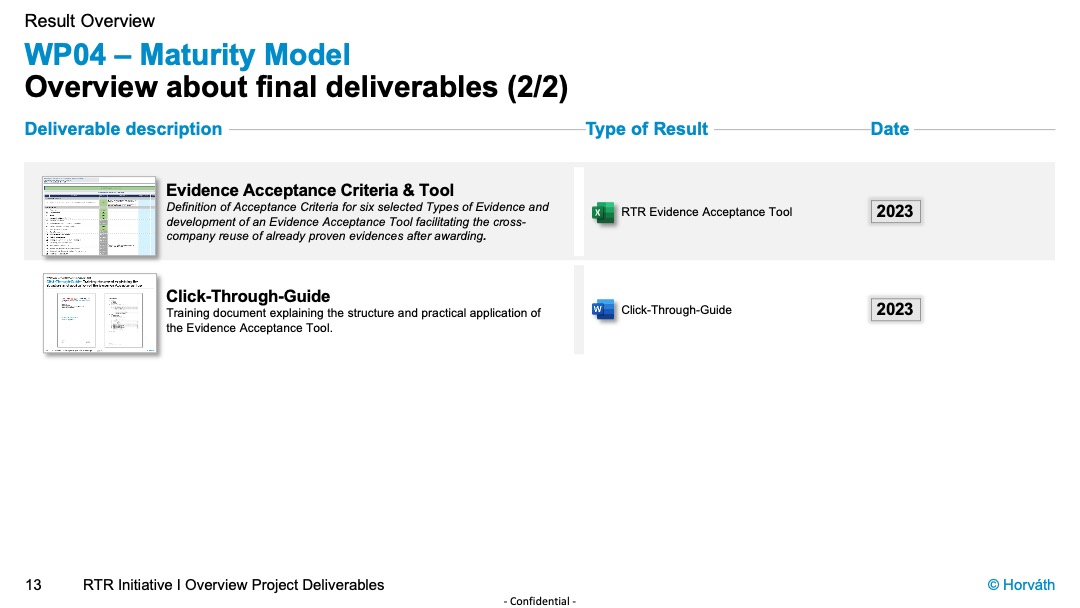
| Evidence Acceptance Criteria & Tool Evidence Acceptance Tool facilitating the cross-company reuse of already proven evidence after awarding. | |||||
| WP05 — Sustainability | Footprint Research Results Research results underpinning the CO₂ footprint framework. | ||||
| Carbon Footprint Structure Tool A tool structuring the carbon footprint calculation. | |||||
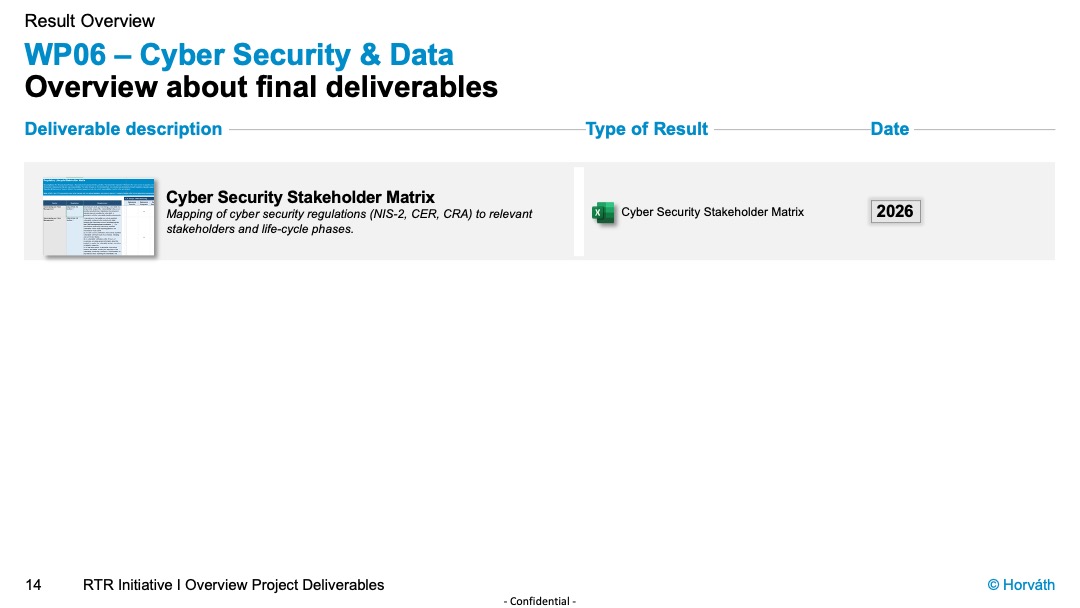
| WP06 — Cyber Security & Data | Cyber Security Stakeholder Matrix A matrix mapping cybersecurity roles and responsibilities across stakeholders, spanning the full process. | ||||
Download Results
To get full access to the download section, incl. all developed results, please register here.
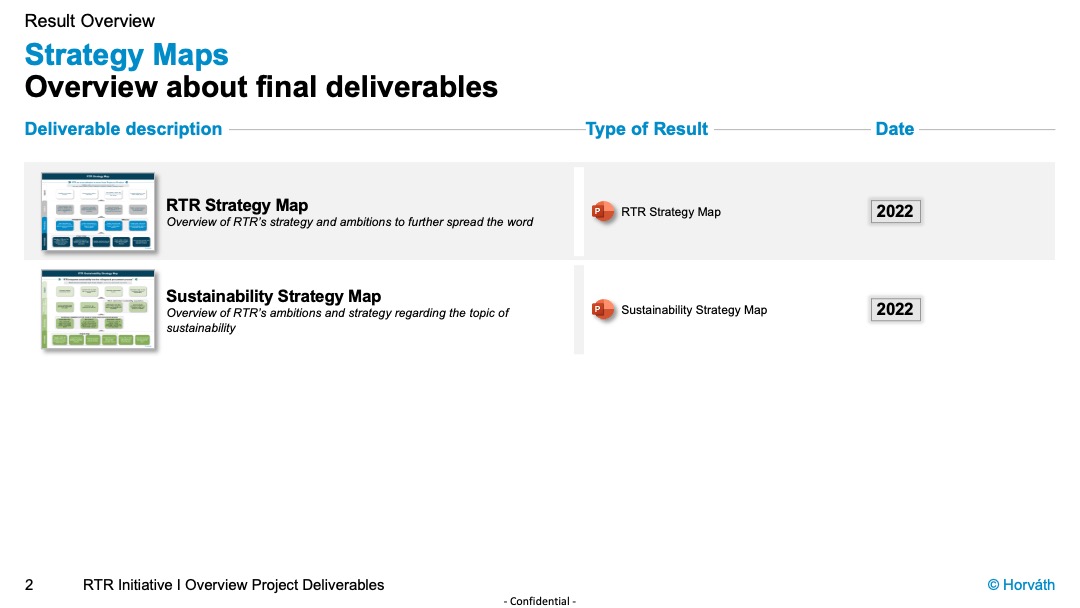
After access has been granted, you will get access to the following documents (see attached presentation)